Ceramic Coating: Is It Right for Your Car?

Is a Ceramic Coating Right for You? An Honest Guide for Car Owners
Introduction: Cutting Through the Hype
If you own a car, you’ve likely heard the incredible claims about ceramic coatings. Marketers tout "diamond-like hardness," "unbreakable protection," and a permanent shield that makes your car invincible. The reality is often lost in the hype, leaving many car owners confused about what these products actually do and whether they are a worthwhile investment.
This guide cuts through the marketing noise. Our goal is to provide a clear, fact-based overview of ceramic coatings to help you determine if one is the right choice for your car, your habits, and your expectations.
--------------------------------------------------------------------------------
1. What a Ceramic Coating Actually Is (and Isn't)
To make an informed decision, you first need to understand the fundamental nature of these products, including their real-world benefits and critical limitations.
A. It's a High-Tech Sacrificial Layer, Not Armor
A true ceramic coating is a liquid polymer, typically containing silicon dioxide (SiO2), that is meticulously applied to a vehicle’s exterior. Through a chemical process, it forms a molecular bond with your car’s factory paint, creating a semi-permanent, protective layer.
Think of it as a high-tech, durable "sacrificial layer." Its job is to take the abuse from chemical contaminants, UV rays, and minor abrasions, protecting the clear coat underneath. It is not an impenetrable suit of armor. It is a renewable shield designed to wear away so your factory paint doesn't.
B. "True" Coatings vs. Ceramic-Infused Sprays
The term "ceramic" is now used on a wide range of products, leading to significant confusion. The two main categories have vastly different application processes, durability, and performance.
True Ceramic Coating
Ceramic-Infused Products (Sprays, Waxes)
Form Factor: Small glass bottles, typically 30-50ml.
Form Factor: Large spray bottles or wax tubs, 300-500ml+.
Application: Difficult, precise process with a small pad; high risk of "high spots" or streaking if done incorrectly.
Application: Far easier to use; spray-on, wipe-off process that is hard to do wrong.
Durability: Can last for years; typically 2-7 years.
Durability: A year at best; 3-6 months is common for sprays.
Thickness & Protection: Creates a measurably thick, hard, and highly resistant layer.
Thickness & Protection: Does not go on anywhere near as thick as a true coating.
C. The Real-World Benefits
When applied and maintained correctly, a true ceramic coating offers several tangible advantages:
Easier Maintenance & Self-Cleaning Properties: Coatings are extremely hydrophobic, meaning they repel water. This causes water to bead up and roll off the surface, taking light dirt and dust with it. This "self-cleaning" effect makes the car significantly easier to wash and dry.
Chemical Resistance: The coating provides a durable barrier against acidic and chemical contaminants that can etch or damage your car's clear coat, such as bird droppings, tree sap, bug guts, and acid rain.
UV Protection: A ceramic coating protects the underlying clear coat from the sun's harmful UV rays. This prevents the paint from oxidizing, fading, and losing its vibrancy over time.
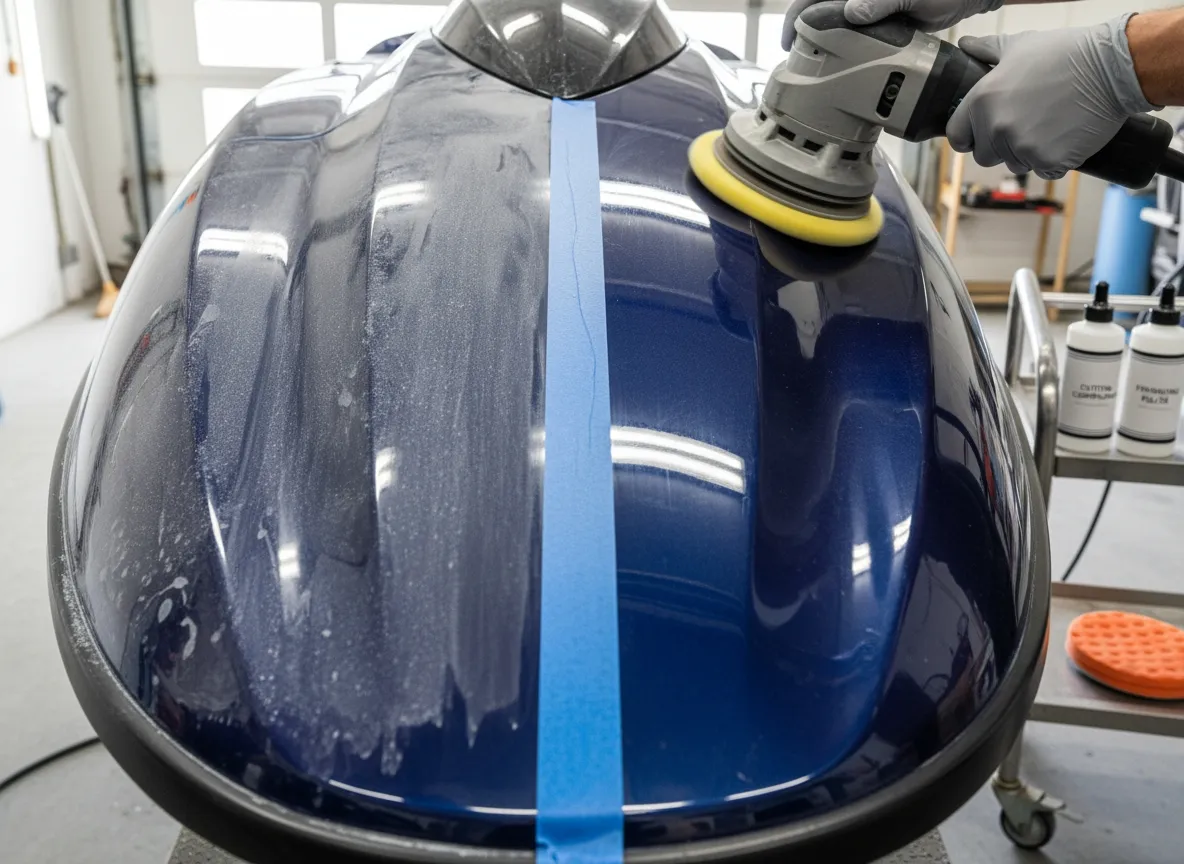
Enhanced Gloss: By creating a perfectly smooth, reflective surface, a coating can significantly enhance the gloss, depth, and "pop" of your car's paint. However, it's crucial to note that the final appearance is primarily determined by the quality of the paint correction (polishing) performed before the coating is applied.
D. The Critical Limitations: What a Coating Will NOT Do
Setting realistic expectations is the most important part of deciding if a coating is right for you. Here are the common myths, debunked:
It Will NOT Stop Rock Chips: A ceramic coating is a very thin, hard layer. It does not have the thickness or impact-absorbing properties to prevent paint chips from rocks and debris at highway speeds.
It is NOT Scratch-Proof: This is the biggest misconception. The "9H hardness" rating refers to the pencil hardness scale, not the Mohs mineral scale (where a diamond is a 10). A 9H pencil rating is roughly equivalent to a 3-4 on the Mohs scale. A coating will resist very light swirl marks but will not protect against deep scratches, key marks, or heavy abrasions.
It Will NOT Eliminate Water Spots: While coatings are hydrophobic, the water beads they create can sit on the surface, evaporate, and leave behind mineral deposits. In fact, the tall, tight beads that coatings create can sometimes make water spots more pronounced if not dried promptly, as they concentrate mineral deposits into smaller, more defined circles.
It Will NOT Replace Car Washes: A ceramic coating is not a "set it and forget it" solution. A coated car still gets dirty and requires regular, proper washing to maintain its appearance and hydrophobic properties. If neglected, a layer of grime will cover the coating, masking its benefits.
--------------------------------------------------------------------------------
2. Who Ceramic Coatings Are For: The Ideal Candidate Profile
A ceramic coating is an excellent investment for certain types of car owners with specific goals and habits.
The Investment Protector: This owner has a new, relatively new, or high-value vehicle (e.g., over $50k) and wants to preserve its factory finish for as long as possible. Their goal is to maintain the car's condition and maximize its future resale value. Data suggests a well-maintained, coated car can see a 5-15% increase in resale value.
The Meticulous Maintainer: This is the owner who is "anal" about their car's appearance. They understand that a coating is a tool that complements a good maintenance routine, not a replacement for one. They are committed to proper hand washing every one to two weeks with pH-neutral shampoos and the correct techniques.
The Busy Professional Who Values Efficiency: This owner wants their car to look great but wants to minimize the time and effort required for cleaning. They see the value in a coating making their washes faster and easier, and keeping the car cleaner between washes.
The Long-Term Planner: This individual prefers a durable, multi-year protection solution. They view the high upfront cost of a professional coating as a sound investment compared to the time, effort, and cumulative cost of reapplying traditional waxes or sealants every few months.
--------------------------------------------------------------------------------
3. Who Should Reconsider: When a Ceramic Coating is a Bad Fit
For many drivers, a ceramic coating is an unnecessary expense that won't align with their habits or goals.
The Budget-Focused Owner: A professional ceramic coating is a significant investment, with costs ranging from $500 to over $2,500. If this initial cost is a major hurdle, a coating is not the right choice. Modern ceramic spray sealants can offer impressive hydrophobic properties and good protection for a fraction of the price.
The "Set It and Forget It" Driver: This owner is looking for a zero-maintenance solution that will keep their car clean and protected with no effort. A ceramic coating will fail this owner. If the car is not washed regularly, the coating will become caked in dirt, lose its hydrophobic properties, and can still be damaged by contaminants.
The Owner Seeking Total Invincibility: If the primary goal is to prevent scratches, dings, and rock chips, a ceramic coating will lead to major disappointment. The correct product for protecting against physical impacts is Paint Protection Film (PPF), a much thicker, self-healing urethane film.
The Automatic Car Wash User: The coarse, dirty bristles used in most automatic car washes are abrasive and can damage a ceramic coating, stripping away its protective abilities and potentially inflicting swirl marks. An owner who relies exclusively on these types of washes should not invest in a coating.
--------------------------------------------------------------------------------
4. The Final Verdict: A Quick Checklist
Ask yourself these five questions. Your answers will give you a clear indication of whether a ceramic coating is a good fit for you.
[ ] Am I willing and able to invest between $500 and $2,500+ for a professional application?
[ ] Am I committed to washing my car by hand (or via a touchless wash) every 1-2 weeks?
[ ] Is my main goal to make cleaning easier and protect my paint from chemical/UV damage, rather than preventing scratches and rock chips?
[ ] Do I see my vehicle as a long-term investment that I want to keep in pristine condition for years?
[ ] Do I have realistic expectations, understanding that a coating is a maintainable, sacrificial layer, not a permanent, invincible shield?
If you answered "yes" to most of these questions, a professional ceramic coating is likely a fantastic choice that will meet and exceed your expectations. If you answered "no" to several, you would be better served by exploring other options, such as high-quality ceramic spray sealants that offer some of the benefits without the high cost and strict maintenance demands.
--------------------------------------------------------------------------------
Conclusion: It's About Matching the Product to the Person
Ceramic coatings are a powerful and effective form of long-term paint protection. They can keep a car looking glossy and new for years while making it incredibly easy to maintain. However, they are not a magic, one-size-fits-all solution. They are a premium product designed for the car owner who has the right budget, expectations, and commitment to proper maintenance. The final decision is not about whether coatings are "good" or "bad," but whether they are the right product for you.
