Paint Correction Near Me in DFW — Cost, What to Expect & When to Skip the DIY
Paint Correction Near Me in DFW — Cost, What to Expect & When to Skip the DIY
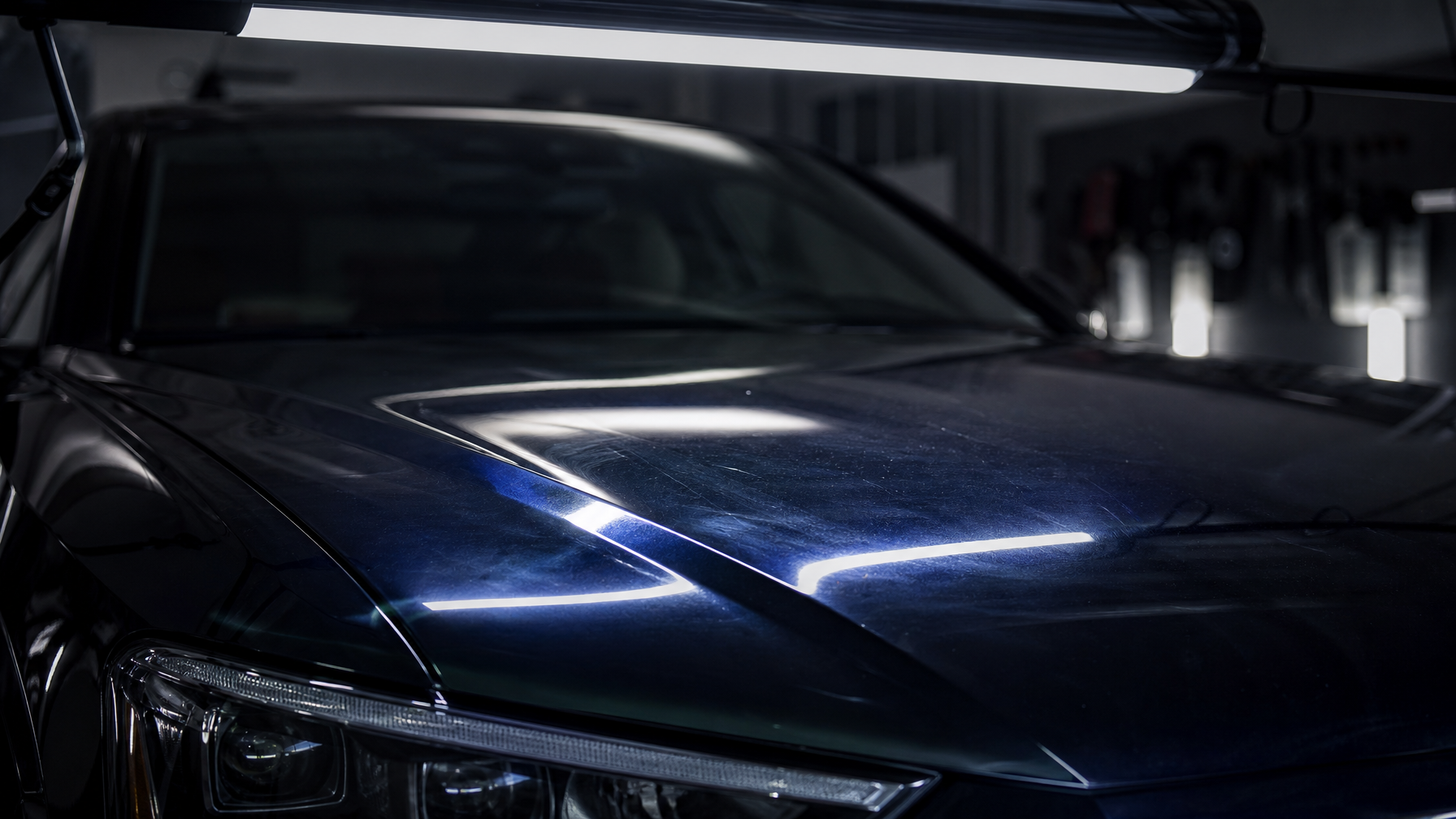
You've seen it in the right light — those circular scratches across every panel, the flat look that wax won't fix, the water spots that came back the next time it rained. That's paint defect damage in the clear coat, and the only real fix is paint correction.
This guide covers what paint correction actually does, what it costs in the DFW area, how to know which stage you need, and the specific situations where DIY is a bad idea. If you're already ready to book, you can see our paint correction pricing and process here — this page is for people who want to understand it first.
How Much Does Paint Correction Cost Near Me? (DFW Pricing)
Before anything else — here's what paint correction actually costs in Dallas–Fort Worth:
Stage What It Does Starting Price Single-stage 40–50% defect removal, light marring and swirls $450+ Two-stage 70–85% removal, most swirls and scratches gone $650+ Three-stage 90%+ removal, show-car level $1,700+
SUVs and trucks add $200–$400 depending on size and paint condition. These are starting prices — heavily damaged paint, deep scratches, or wet sanding work will push the price up.
Why the range? Because pricing is based on what the paint actually needs, not a menu pick. A shop doing this correctly will measure your clear coat depth with a paint thickness gauge before quoting you. If they're quoting firm prices over the phone without seeing the vehicle, that's a red flag.
Get a free paint inspection at My Detail Guys →
What Is Paint Correction and What Does It Actually Fix?
Paint correction is machine polishing that removes defects by leveling the clear coat — the transparent outer layer of your paint system. Using compounds and polishes on a rotary or dual-action machine, a technician removes microscopic amounts of clear coat until the surface is flat and reflective again.
What it fixes:
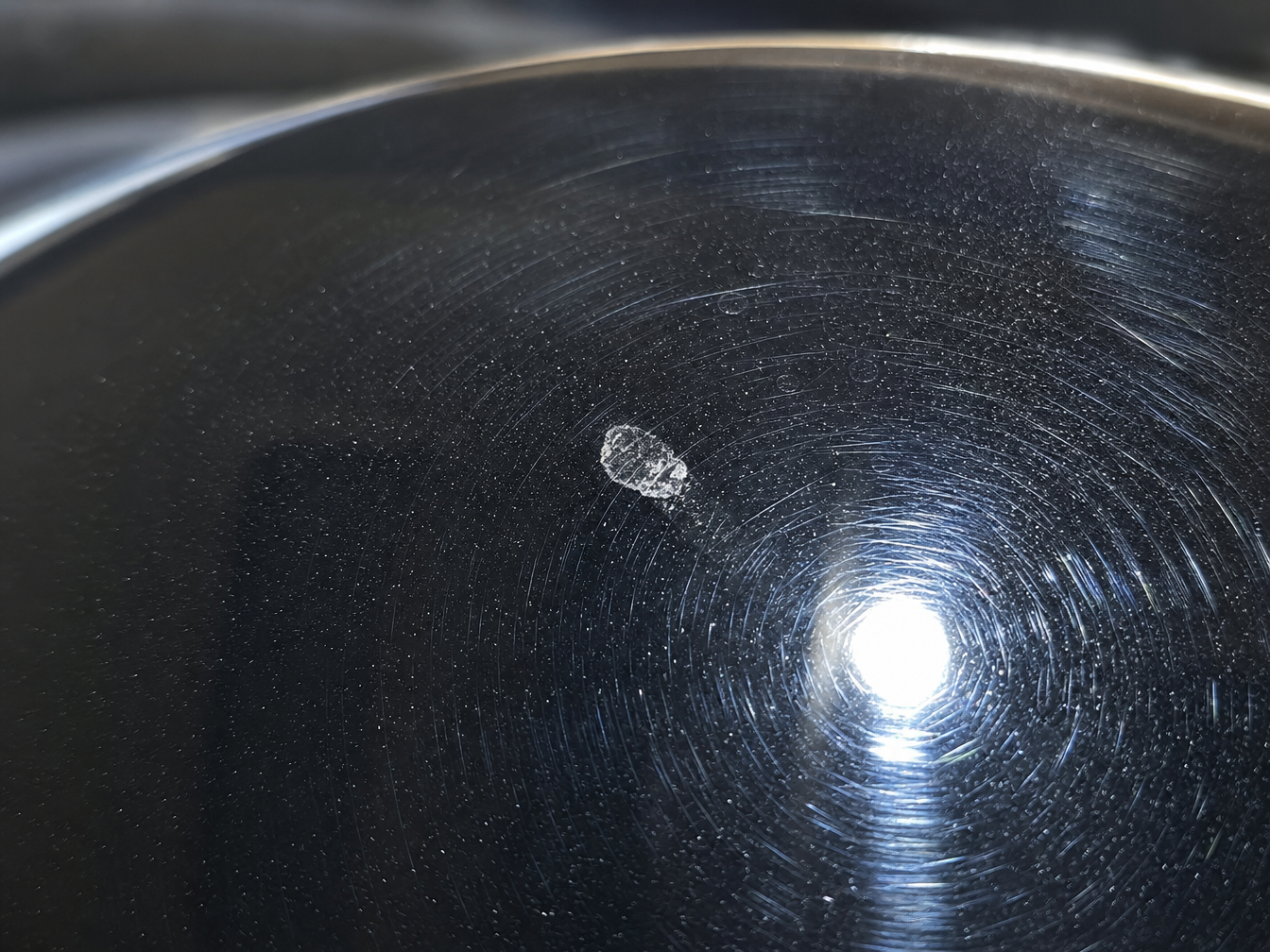
Swirl marks — the circular "spiderweb" scratches from automatic car washes and dirty microfiber
Water spot etching — mineral deposits that bonded to the clear coat and won't wash off
Light to moderate scratches — clear coat level only; anything through to primer needs paint, not polish
Oxidation — the dull, chalky look from UV exposure and neglect
Buffer trails and holograms — marring left by inexperienced detailers or rotary polishers
Bird drop etching — acidic damage from droppings that sat too long
What it does not fix: scratches through the clear coat into the color layer or primer. Those need touch-up paint or a panel repaint.
How to Know Which Stage of Paint Correction You Need
This is where most people overcomplicate it.
Single-Stage Correction ($450+)
One machine polishing step with a finishing polish. Removes 40–50% of defects. The paint looks noticeably better and glossier — most people would call it a significant improvement. You'll still see some swirls up close under direct light. Best for: newer cars with light marring, or any vehicle where "better" is the goal, not "perfect." Takes 4–6 hours for a sedan.
Two-Stage Correction ($650+)
A cutting compound pass first to remove deeper defects, then a finishing polish to refine the surface. Removes 70–85% of defects — most swirls, scratches, and water spots are gone. This is the sweet spot for daily drivers with moderate damage. Best for: anyone who wants genuinely clean paint and a glossy finish without paying for perfection. Takes 8–12 hours depending on the vehicle.
Three-Stage Correction ($1,700+)
Heavy cutting compound, medium polish, then final finishing polish. 90%+ defect removal — as close to perfect as your paint allows. Requires adequate clear coat depth. Best for: show cars, high-end vehicles, or pre-ceramic coating prep where the finish has to be flawless. Takes 16–20+ hours.
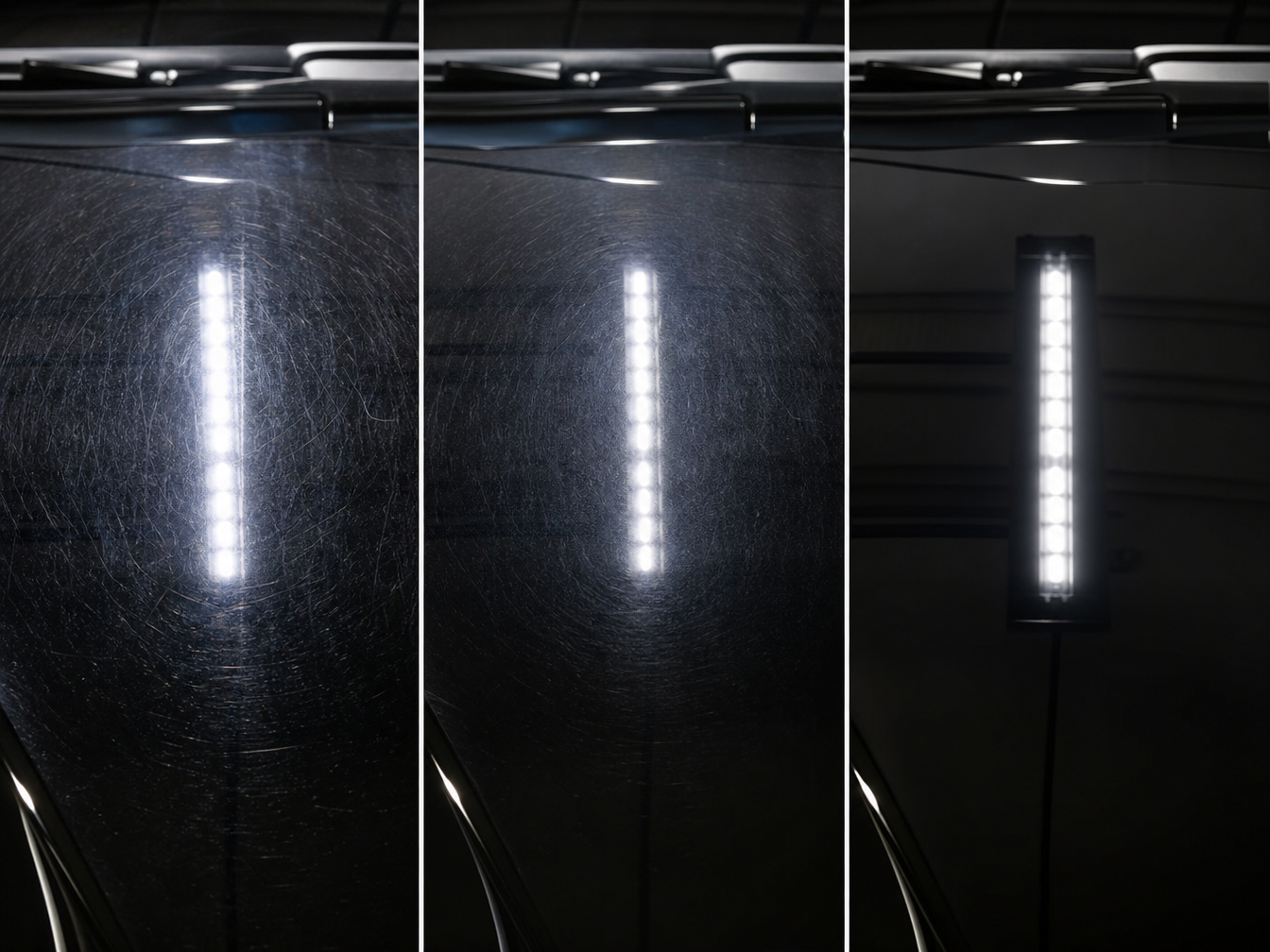
The honest version: you don't pick the stage — the paint does. A professional will inspect under LED lighting and measure paint thickness before making a recommendation. If you're being upsold to three-stage on a daily driver, push back.
What Are the Types of Car Paint Scratches and How Do You Identify Them?
Understanding what layer is damaged tells you whether correction will work at all — or whether you need something else.
Think of your paint as a layer cake:
Clear coat (outermost) — transparent, protective. This is what correction works on.
Base coat (color layer) — the actual color of the car.
Primer — the adhesion layer.
Metal — bare steel or aluminum.
Quick field identification:
Fingernail test: Drag a clean fingernail across the scratch lightly. Doesn't catch = surface level, likely correctable. Catches = deeper clear coat or below it.
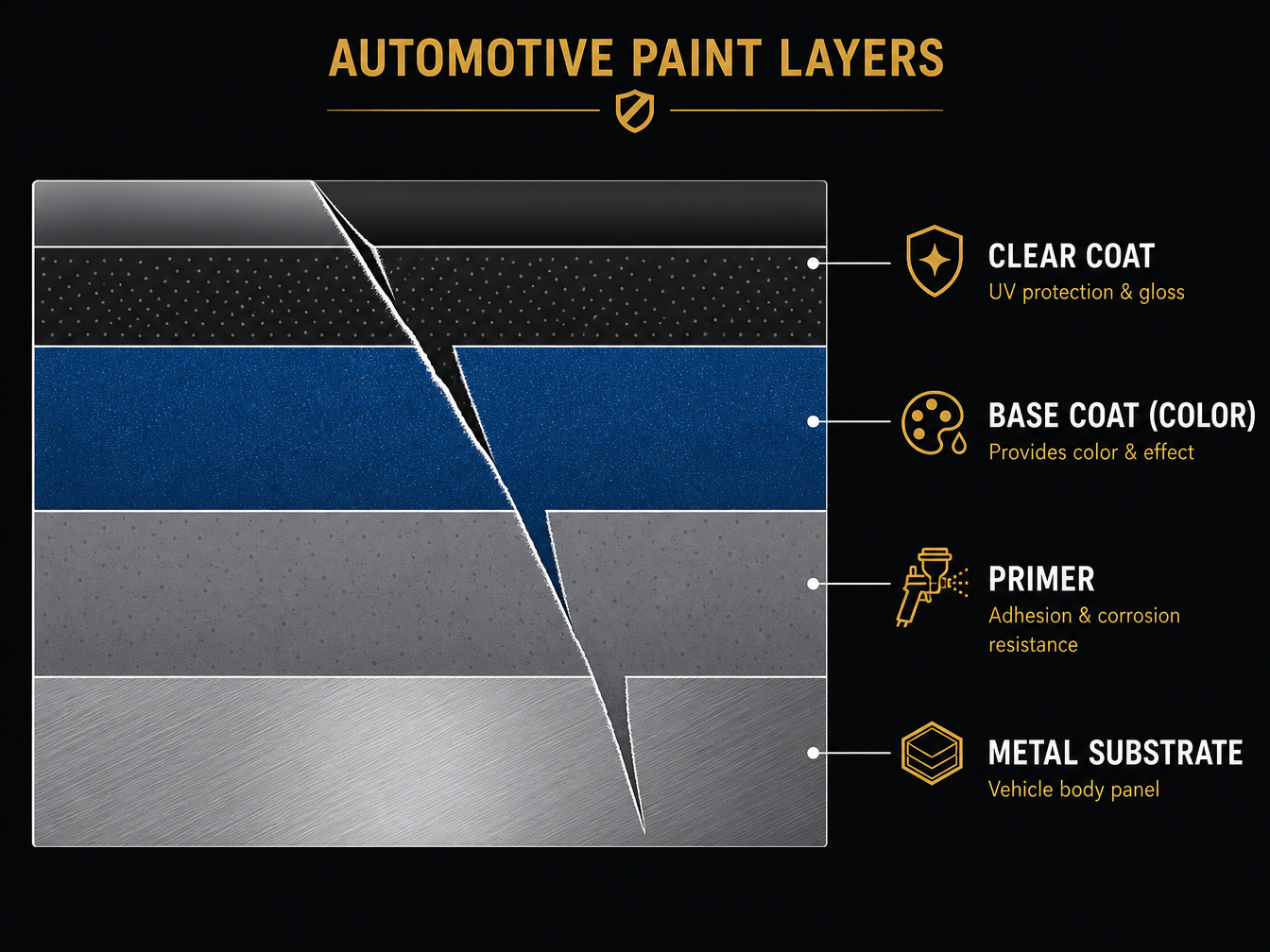
Color test: White or gray line = clear coat damage, usually correctable. You see the car's actual body color in the scratch = base coat exposure, correction reduces visibility but may not eliminate. Gray primer or shiny metal = correction alone won't fix it.
Light test: Use direct sunlight or a strong LED. Swirl marks show as circular spiderwebbing around reflections. Dark colors, especially black, will expose these aggressively.
The Correct Paint Correction Process (What a Pro Does)
Paint correction done wrong creates new damage. Here's the actual sequence that matters:
1. Full Wash and Decontamination
pH-neutral shampoo wash, iron remover if needed, then clay bar to pull bonded contamination off the surface. Skipping this step means polishing contaminants into the paint — which creates scratches while removing them.
2. Paint Thickness Measurement
A paint depth gauge tells you how much clear coat is on each panel. Factory clear coats vary — some are thick enough for three-stage correction, some are thin enough that even a single-stage has to be conservative. This measurement determines what's safe.
3. Test Panel
Before working the whole car, a pro tests compound and pad combinations on a hidden section — usually the roof or a door jamb — to dial in the right combination without committing to it everywhere.
4. Panel-by-Panel Machine Work
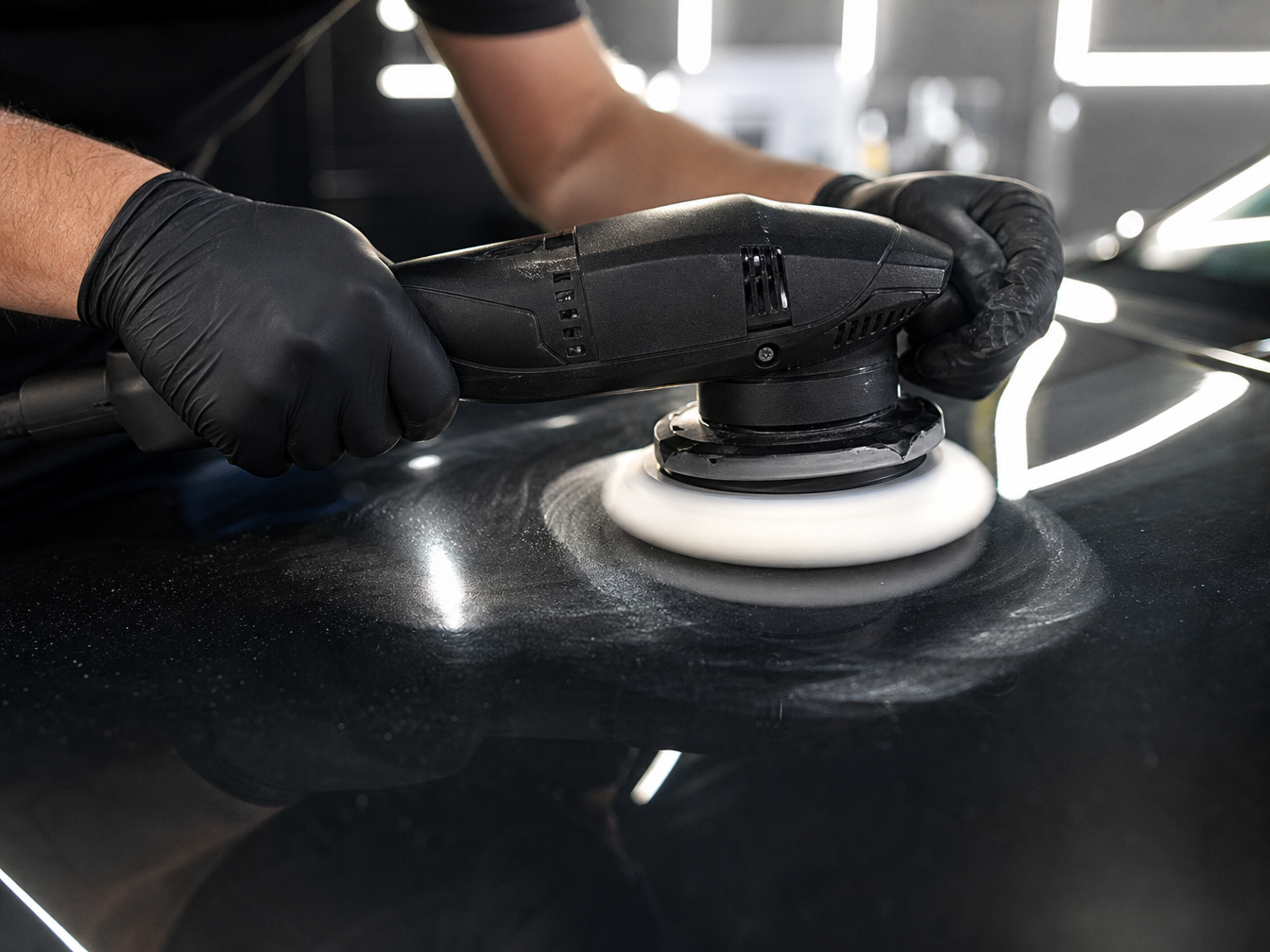
Working in 2×2-foot sections with a dual-action or rotary polisher, cutting passes remove the defects and finishing passes refine the surface back to gloss.
5. IPA Wipe-Down
Isopropyl alcohol wipe removes polishing oils so you can see the actual finish — not the temporary gloss those oils add. This is the truth check.
6. Final Inspection Under LED Lighting
The finished surface gets checked under a direct LED bar. If it doesn't meet the standard, that area gets worked again.
DIY Paint Correction: When It Makes Sense and When It Doesn't
DIY correction can produce real results — with the right tools, patience, and realistic expectations about what's achievable by hand or with a consumer DA polisher.
What DIY can do:
Remove or noticeably reduce clear coat swirls and light scratches
Improve overall gloss on a neglected vehicle
Prepare paint for a sealant application
What DIY cannot do:
Remove scratches through the color coat or into primer
Match the clarity and defect removal of a professional multi-stage correction
Safely work on thin paint without a paint gauge
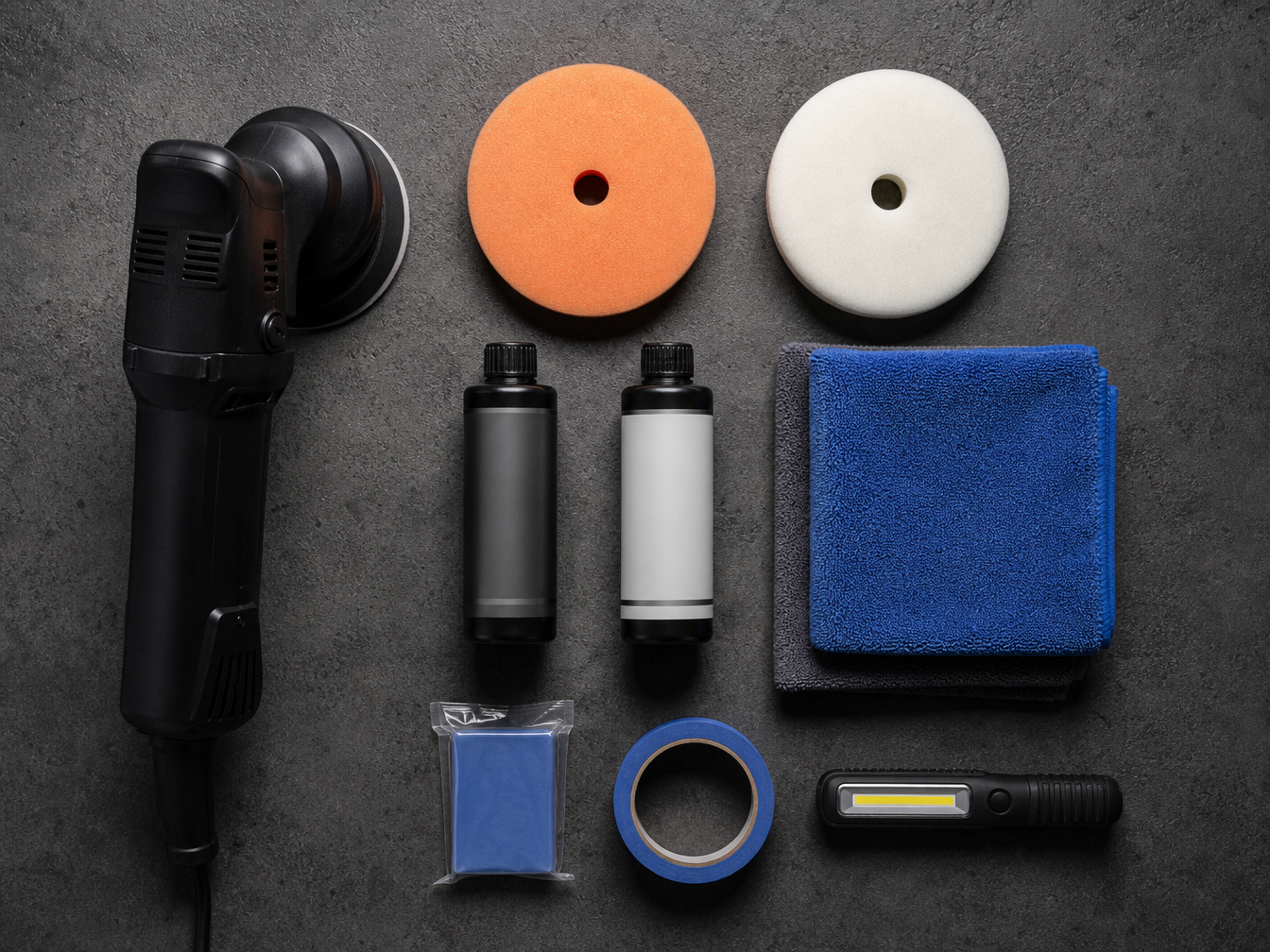
Minimum kit for real results:
Quality wash supplies (bucket, microfiber mitt, pH-neutral shampoo)
Clay bar or clay mitt + lube
Dual-action (DA) polisher — safer than rotary for beginners
Cutting pad and finishing pad
Compound + finishing polish (two-step capability)
Clean microfiber towels (more than you think you need)
Strong LED inspection light
Painter's tape for masking edges and trim
Safety rules to not skip:
Don't polish hot paint in direct sun — product flashes, pads skip, risk goes up
Keep the pad flat — tilting digs in and burns edges
Don't use heavy pressure on body lines and edges
Brush or swap pads often — loaded pads grind, not polish
If you hit primer or metal: stop and plan touch-up or a repaint conversation
The honest tradeoff: DIY versus professional
If your car has light swirls across a few panels and you're looking for improvement, not perfection — a DA polisher and quality products will get you there. If you have heavy swirling across every panel, dark paint, thin clear coat, pre-ceramic coating prep, or you've never done this before — the risk of burning edges, creating haze, or locking in problems is real. Professional correction exists because the difference between "polished it" and "corrected it" is the result of years of technique, proper gauging, and knowing when to stop.
What Happens If You Skip Correction Before Ceramic Coating?
This is the most common expensive mistake in detailing.
Ceramic coating bonds to whatever surface it's applied on. If that surface has swirl marks and scratches, the coating locks them in permanently — and the gloss amplification that makes coated paint look great also makes the defects underneath more visible.
The correct order is always: paint correction → ceramic coating → maintenance washing
If you've seen ceramic-coated cars that look swirly and dull, this is why.
See My Detail Guys' paint correction and ceramic coating packages →
How to Protect Corrected Paint and Keep It Looking Right
Most swirls come back from bad wash habits. If the washing routine doesn't change after correction, the result won't last.
Wash habits that matter:
Two-bucket method (one wash, one rinse) or a proper rinseless wash
Pre-rinse before touching paint — dragging grit across dry paint is how swirls happen
Quality microfiber wash mitt, not sponges
Dry with a dedicated microfiber drying towel and drying aid — not cotton bath towels
Avoid automated brush car washes entirely if you care about the paint
Protection that extends the correction:
Quality paint sealant every 3–4 months if not ceramic coated
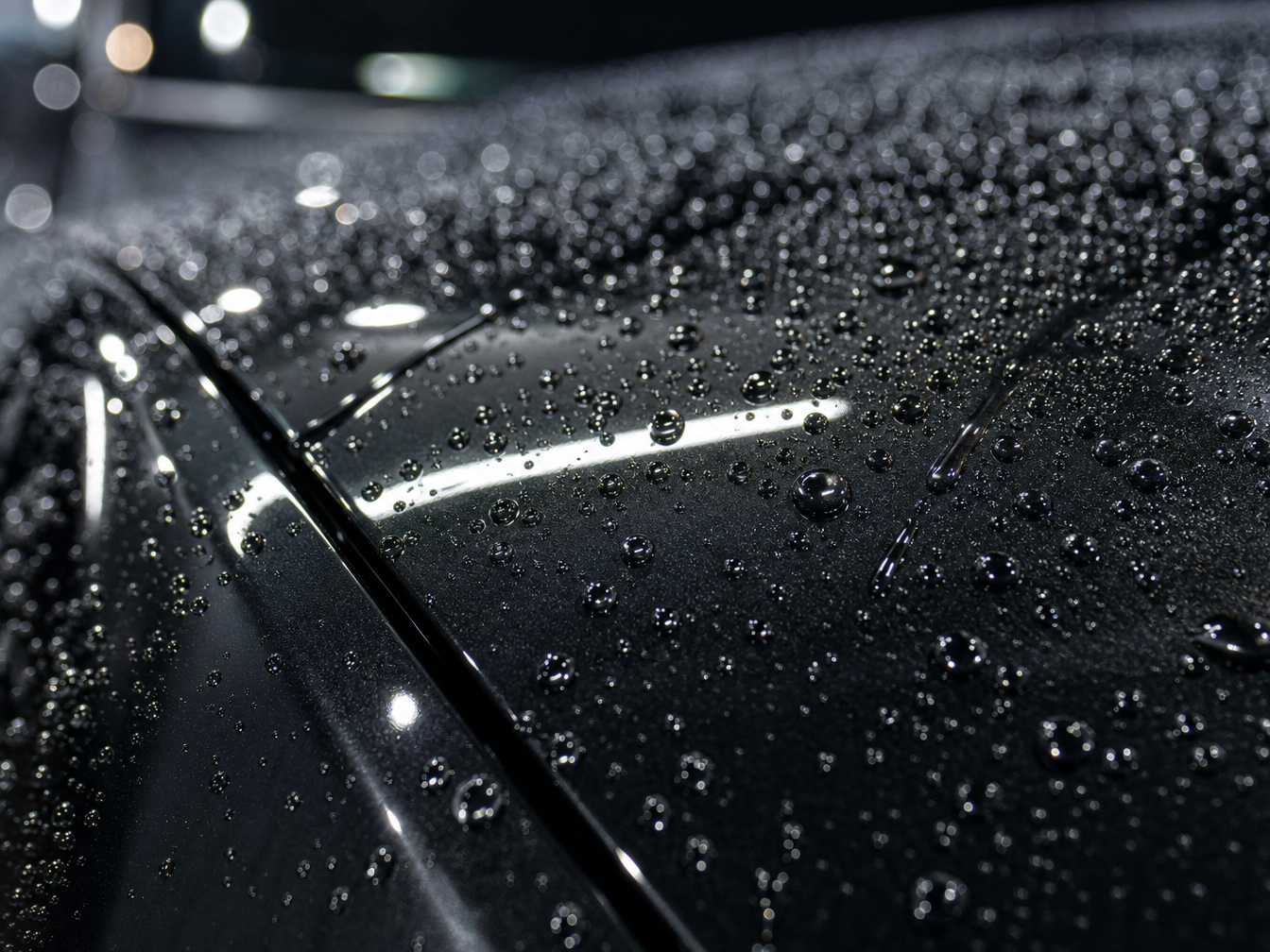
Ceramic coating: the most durable option — hydrophobic, UV resistant, easier to wash safely (fewer future swirls)
FAQs — Paint Correction Near Me (DFW)
How much does paint correction cost near me in Dallas–Fort Worth?
Single-stage correction starts at $450, two-stage at $650, and three-stage at $1,700+. SUVs and trucks typically add $200–$400. Pricing depends on vehicle size, paint condition, and correction level needed. My Detail Guys offers free inspections with a paint thickness gauge before quoting — book here.
How is paint correction different from a car detailing service?
A detail cleans and protects. Paint correction removes actual physical defects from the clear coat using machine polishing. They're related but distinct services. Full details often include a basic polish step; correction is a dedicated service measured in clear coat depth, not cleaning time.
Can all car scratches be removed by paint correction?
No. Correction removes defects within the clear coat. Scratches through the color coat or into primer require touch-up paint or a panel repaint. The fingernail test is a quick field check: if the nail catches in the scratch, it may be too deep for polishing alone.
How long does paint correction take?
Single-stage: 4–6 hours. Two-stage: 8–12 hours. Three-stage: 16–20+ hours. Wet sanding and severe defect work can extend these times. This is not a same-day oil change situation — it's skilled labor on the most visible part of the vehicle.
How often should paint correction be done?
A well-maintained vehicle with ceramic protection typically needs full correction every 1–3 years. Poor wash habits, no protection, or parking outdoors in a harsh climate accelerates that timeline. Ceramic coating and proper maintenance washing significantly extend the interval.
Does paint correction work on black cars?
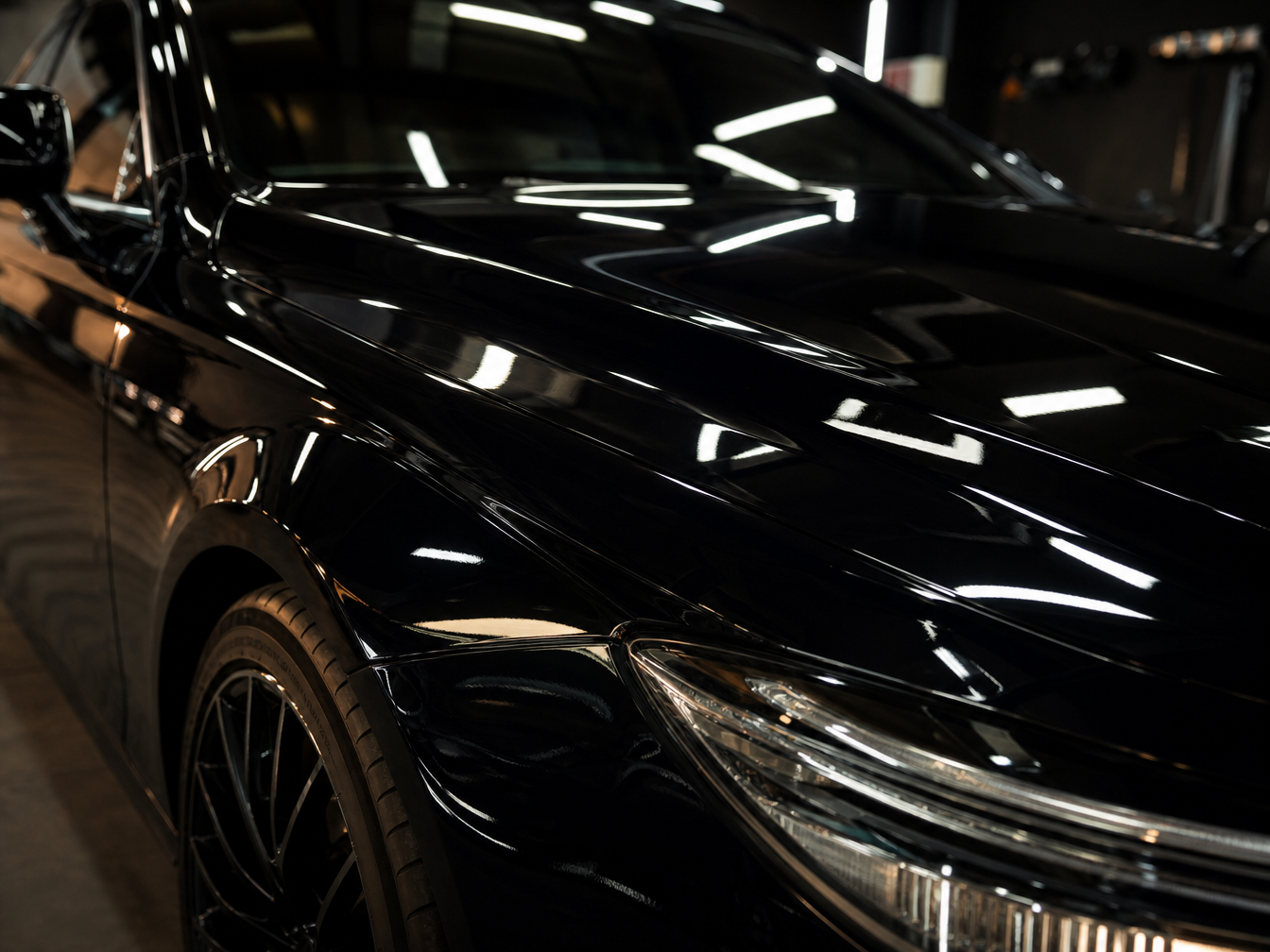
Yes — and it matters more on dark paint because black amplifies every swirl and scratch. The correction process is the same, but the result is more visible. Black paint also typically shows more orange peel and requires more careful inspection under LED lighting. If you're on a black vehicle, two-stage or three-stage correction is usually the right call.
Do I need ceramic coating after paint correction?
You don't have to, but it's the logical next step if you're already investing in correction. Correction fixes the defects — ceramic coating prevents new ones from building up and makes maintenance washing safer (which prevents future swirls). Coating without correcting first locks in the damage permanently.
My Detail Guys serves Fort Worth, Dallas, Arlington, Keller, Southlake, Euless, Hurst, Bedford, Richland Hills, and surrounding DFW communities. Mobile services are available at select locations — call to confirm service area.